Safeguarding Statement
Safeguarding Adults & Children
Safeguarding means taking active steps to protect the wellbeing, dignity and rights of adults and children, ensuring they are safe from abuse, neglect, harm or exploitation. It also involves raising awareness and helping staff, volunteers and others to recognise concerns and respond appropriately.
St Mary’s Hospice is fully committed to safeguarding and operates a zero-tolerance approach to any form of abuse, neglect or discrimination.
Safeguarding is Everyone’s Responsibility
At St Mary’s Hospice, we believe that every person has the right to live free from abuse, harm and exploitation. We have a legal and moral duty to promote the wellbeing of those who use our services and to safeguard individuals and families who may be at risk, including from neglect, exploitation, radicalisation or other forms of harm.
Safeguarding is a core priority at St Mary’s Hospice. We maintain strong safeguarding arrangements through clear leadership, effective governance and a culture of openness and accountability. Our policies and procedures are accessible, regularly reviewed and aligned with relevant legislation, statutory guidance and recognised best practice. We also ensure clear lines of responsibility, supported by monitoring, auditing and learning from incidents to continually improve our approach.
To support safe and effective practice, all clinical and non-clinical staff, volunteers and trustees receive safeguarding training appropriate to their role and level of responsibility.
Safeguarding Champions
St Mary’s Hospice has Safeguarding Champions across its services who meet regularly to share learning, promote best practice and support continuous improvement in safeguarding. They act as a local point of expertise, helping to strengthen awareness, confidence and consistency in safeguarding across the organisation.
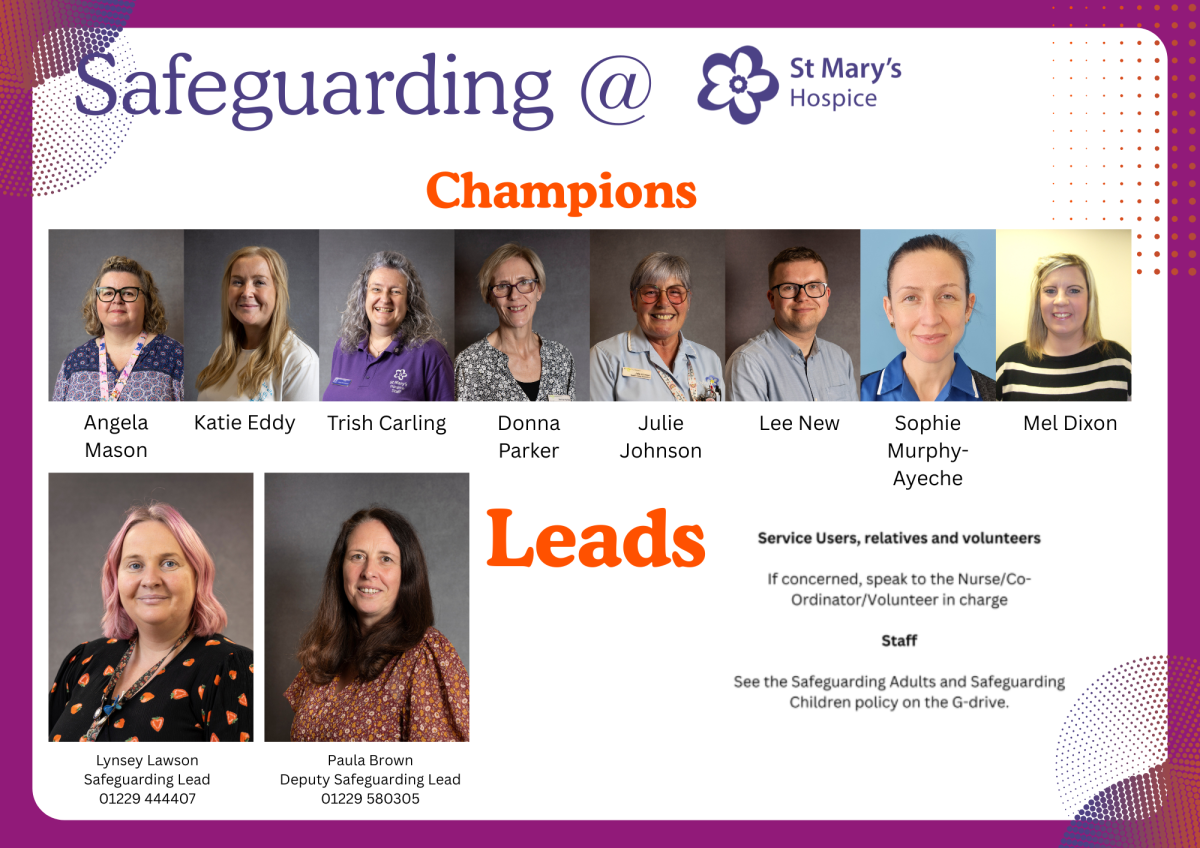
St Mary’s Hospice Safeguarding Lead is Lynsey Lawson, Head of Community Services
Email: lynsey.lawson@stmaryshospice.org.uk
Telephone : 01229 444407
Who to contact in an emergency:
Call the Police on 999 if…
an adult, child or young person is in immediate danger or a crime has been committed.
Call 999 if…
a life is at risk, someone has seriously injured themselves
Call 111 if…
there is a mental health crisis. After calling 111, select the ‘mental health option’
Local Safeguarding Boards
The Safeguarding Children Partnerships and Safeguarding Adult Boards are made up of representatives from social care, the police and health, and are responsible for ensuring safeguarding arrangements are in place.
- Cumbria Safeguarding Adults Board
- Westmorland and Furness Safeguarding Children Partnership
- Cumberland Safeguarding Children Partnership
Strengthening our practice through Reflection and learning
As part of our ongoing commitment to safeguarding, we place strong emphasis on continuous learning, reflection, and partnership working.
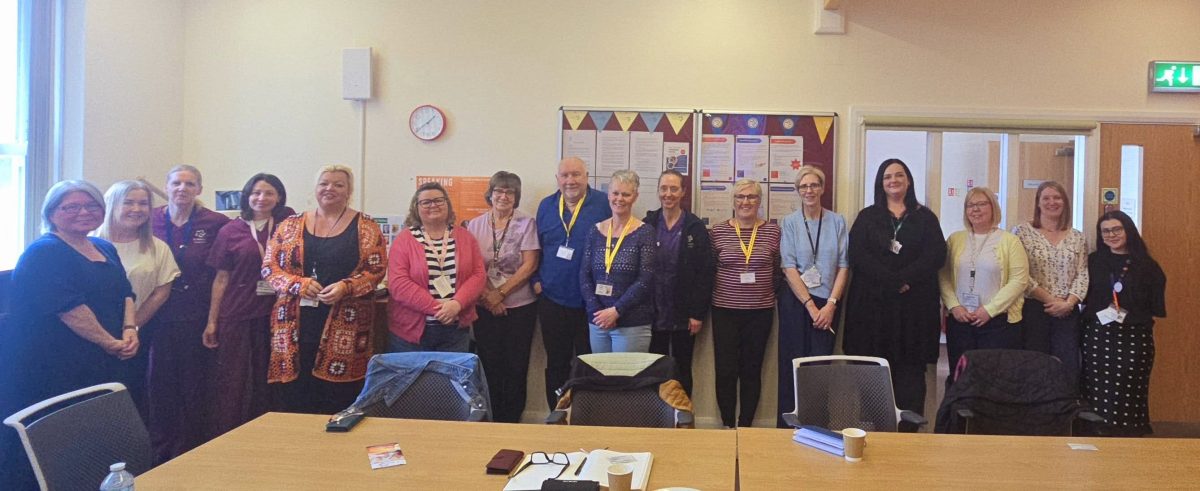
We recently welcomed a Social Worker from Westmorland and Furness Council to our hospice for a dedicated Lunch & Learn session with our staff and volunteers. This session provided a valuable opportunity to come together and focus specifically on safeguarding in practice.
During the session, we focused on partnership working—exploring how we collaborate effectively with external professionals, share information appropriately, and ensure a coordinated, person-centred approach to safeguarding. We reflected on roles and responsibilities, communication pathways, and how strong partnerships lead to better outcomes for the people we support.
The session enabled open discussion, encouraged professional curiosity, and reinforced a shared responsibility for safeguarding across all roles within the organisation. It also highlighted the importance of building and maintaining strong relationships with partner agencies to ensure timely and effective responses to concerns.
We are committed to providing regular opportunities like this to ensure our teams remain confident, informed and proactive in safeguarding. By embedding learning, reflection and partnership into our everyday practice, we continue to strengthen our safeguarding culture and deliver safe, high-quality care.